Who Can Apply for Subhadra Yojana? Simple Guide
If you’ve heard about Subhadra Yojana, the first question that probably comes to mind is:
“Can I apply?”
It’s a fair question, and it’s one that thousands of people ask before they start collecting documents or filling out an application.
The answer isn’t based on a single rule. Government welfare schemes usually have a set of conditions that decide who can receive the benefits. That’s why it’s important to understand who the scheme is designed for before you spend time preparing your application.
This guide explains the type of applicants the scheme is intended to support, the situations that may affect eligibility, and the common misunderstandings that often lead to confusion.
Quick Answer
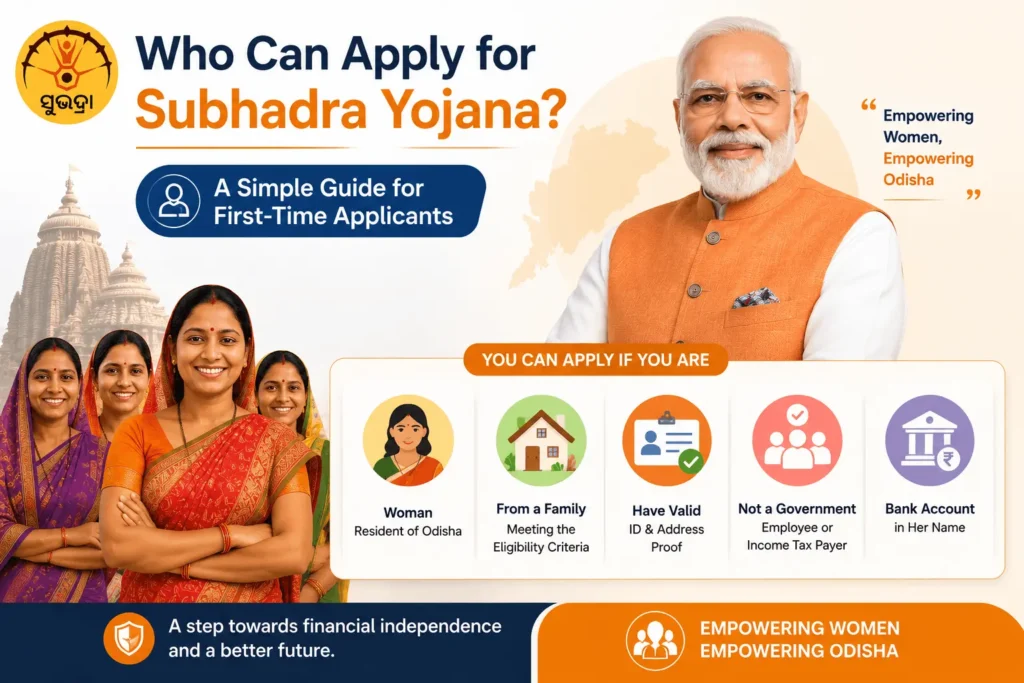
Subhadra Yojana is meant for applicants who satisfy the eligibility conditions announced by the Government of Odisha. Whether you can apply depends on factors such as the official guidelines, your personal circumstances, and the information you provide during the application process.
Why This Question Matters
Many applicants begin searching for the application form before checking whether they actually qualify.
That can lead to unnecessary frustration.
Imagine spending an hour completing an application, uploading documents, and reviewing every detail, only to discover later that you didn’t meet one of the required conditions. A few minutes spent understanding who the scheme is intended for can save you a lot of time.
That’s why checking eligibility requirements should always come before starting the online application.
The Scheme Is Designed for Eligible Applicants
Every government welfare scheme has a target group.
Subhadra Yojana is no different.
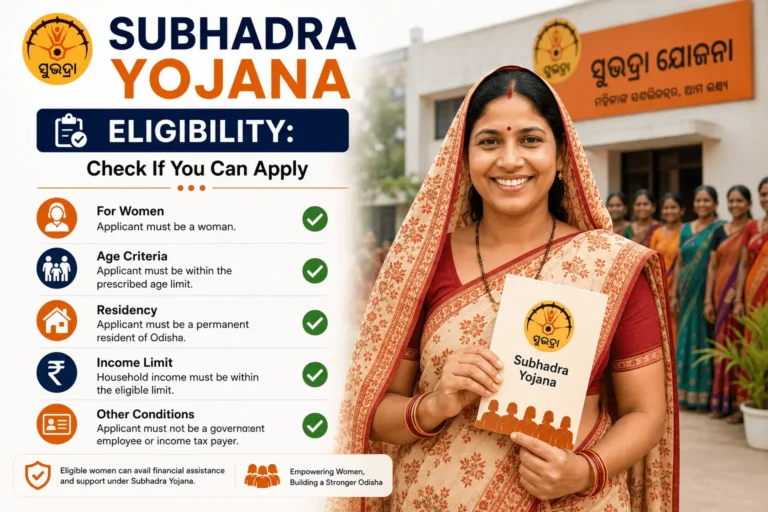
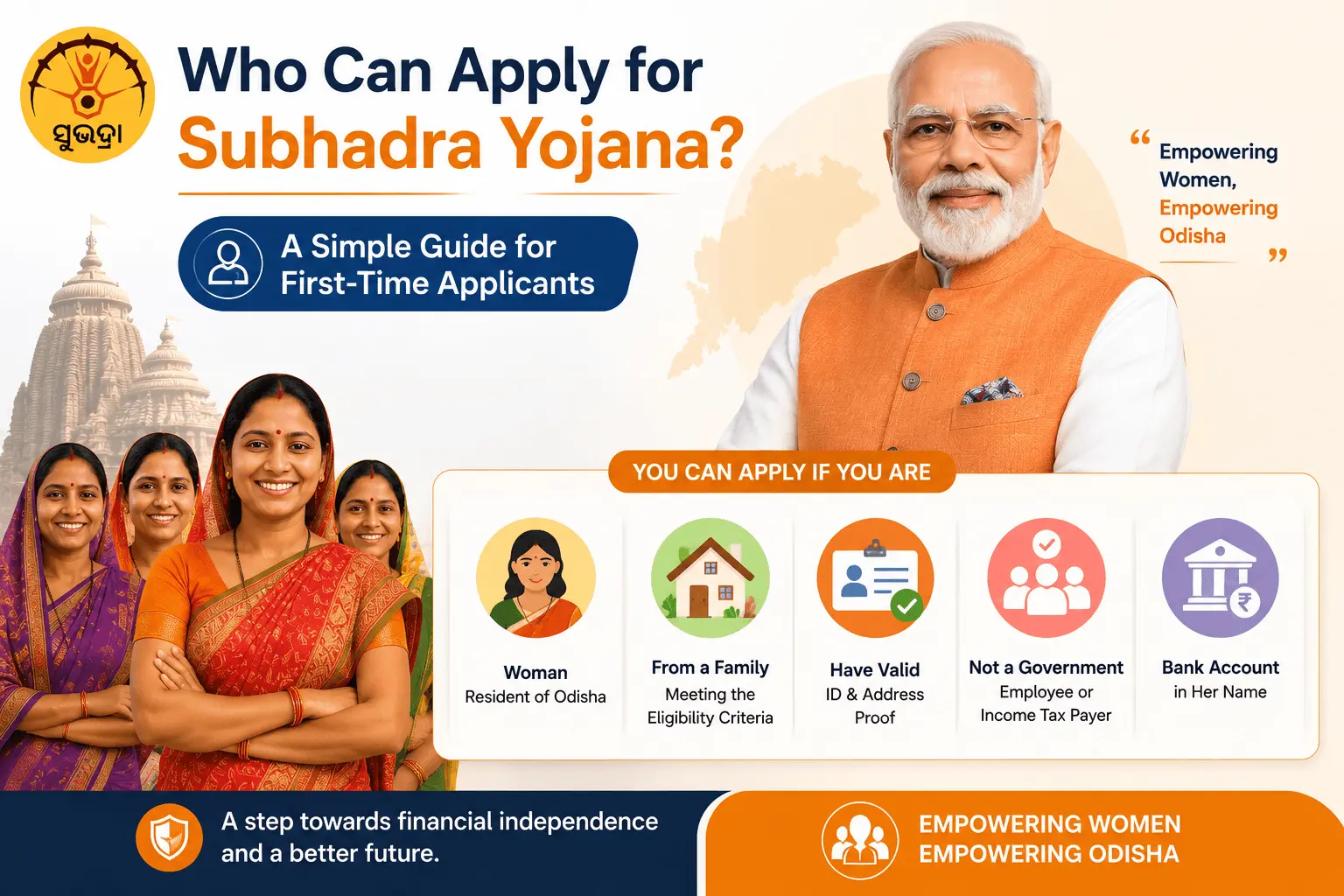
The scheme is intended for applicants who meet the conditions laid down by the Government of Odisha. These conditions help ensure that the benefits reach the people the scheme was created to support.
Instead of comparing your situation with a neighbour, a friend, or a social media post, compare it with the latest official guidelines. That’s the most reliable way to understand whether you can apply.
Remember, every application is reviewed individually. Even if two people live in the same area, their eligibility may not always be the same.
Before You Decide to Apply
Ask yourself these simple questions.
| Question | Why It Matters |
| Have I read the latest eligibility guidelines? | It helps you understand whether the scheme is meant for you. |
| Do I meet the required conditions? | This is the foundation of your application. |
| Can I provide supporting documents if required? | Your information may need to be verified. |
| Am I ready to complete the application if I’m eligible? | Being prepared saves time later. |
If you can answer “Yes” to these questions, you’re ready to move forward.
If you’re still unsure, take a little more time to review the eligibility criteria before beginning the application process. It’s much better to confirm your eligibility now than to discover a problem after you’ve already applied.
Quick Tip
Don’t let rumours decide whether you can apply. The official eligibility rules are always more reliable than advice shared in WhatsApp groups, Facebook posts, or YouTube comments.
Who May Be Eligible and Who May Not?
By now, you know that the scheme has eligibility conditions. The next step is understanding how those conditions apply in real life.
One of the biggest mistakes people make is looking for a simple “yes” or “no” answer. Government schemes rarely work that way. Eligibility is usually decided after reviewing the information provided in your application and checking whether it matches the official requirements.
Instead of asking, “Can anyone apply?”, a better question is:
“Does my situation match the conditions of the scheme?”
That’s the question you should answer before moving forward.
You May Be Eligible If…
While the final decision is always based on the latest government guidelines, applicants generally have a better chance of qualifying if they meet the prescribed conditions and can support the information provided in their application.
Before applying, ask yourself:
- Do I meet the official eligibility conditions?
- Can I provide accurate information if it’s requested?
- Are my personal records up to date?
- Am I ready to complete the application honestly and correctly?
If the answer is “Yes” to these questions, you’re already moving in the right direction.
Remember, eligibility isn’t about applying quickly. It’s about applying correctly.
You May Not Qualify If…
It’s equally important to understand situations where an application may not move forward.
An application could face problems if:
- The applicant doesn’t meet the official eligibility conditions.
- Required information cannot be verified.
- Important details are incorrect or incomplete.
- Supporting documents don’t match the information provided.
- The application doesn’t follow the latest government guidelines.
Knowing these situations beforehand can save you time and help you avoid unnecessary disappointment.
Good Advice
If you’re unsure about even one eligibility condition, take a few minutes to check the official guidelines before submitting your application. It’s much easier to clarify a question now than to deal with a rejected application later.
Don’t Compare Your Application With Someone Else’s
This is probably the biggest misunderstanding surrounding government schemes.
You might hear someone say:
“My neighbour applied successfully.”
Or:
“My relative received the benefit, so I should qualify too.”
Unfortunately, it doesn’t work like that.
Every application is reviewed individually. Two applicants living in the same village, working similar jobs, or even belonging to the same family may not always receive the same outcome.
The information provided, supporting documents, and official eligibility rules are what matter, not someone else’s experience.
A Few Minutes of Preparation Can Save Weeks Later
Many applications run into problems because applicants are in a hurry.
Before you move to the next step, pause for a moment and review your situation honestly.
| Ask Yourself | Why It Helps |
| Have I checked the latest eligibility rules? | Ensures you’re following the current official guidelines. |
| Is my information accurate? | Reduces the chances of verification issues. |
| Can I support my application with the required documents? | Makes the review process smoother. |
| Am I relying on official information instead of rumours? | Helps you avoid unnecessary mistakes. |
If everything looks good, you’re ready for the next stage.
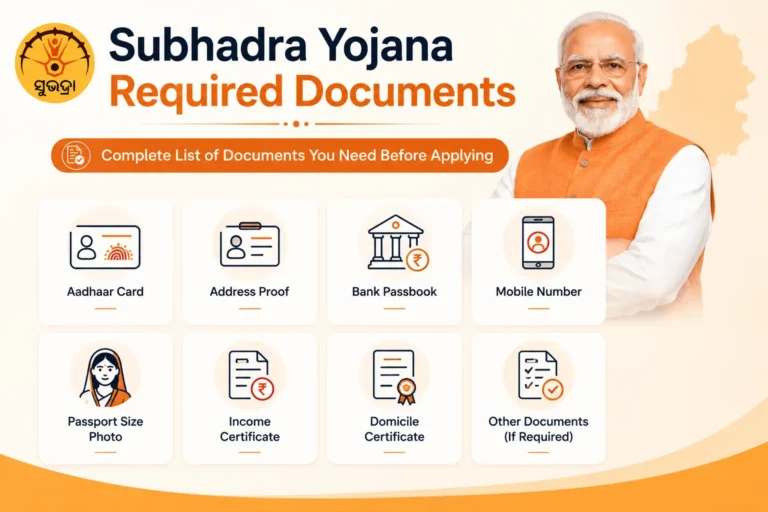
The next step is preparing the required documents you’ll need during the application. Once everything is ready, you can move on to the online application with much more confidence.
Quick Tip
Don’t treat eligibility as a formality. It’s the foundation of your entire application. Spending a little extra time checking the requirements today can save you from delays, corrections, or even rejection later.
Frequently Asked Questions
Can anyone apply for Subhadra Yojana?
No. The scheme is intended only for applicants who meet the eligibility conditions announced by the Government of Odisha. Before applying, make sure you understand the official requirements instead of assuming you qualify.
How can I check if I’m eligible?
The best way is to compare your situation with the latest eligibility guidelines. Look at the official conditions carefully and make sure the information you plan to submit matches your records.
If someone in my family qualified, does that mean I can apply too?
Not necessarily.
Every application is reviewed individually. Even family members may have different circumstances, so another person’s approval doesn’t guarantee that your application will also qualify.
Can my application be rejected if I’m not eligible?
Yes. During the review process, your application is checked against the official eligibility conditions. If you don’t meet the required criteria, your application may not be approved.
Do I need to check my age and income before applying?
Yes. If the scheme includes age or income conditions, you should review them before starting your application. This helps you avoid spending time on an application that may not meet the official requirements.
What if I’m unsure about one of the eligibility conditions?
Don’t guess.
Read the latest government notification or wait until you can confirm the correct information. Applying based on assumptions may create unnecessary delays or lead to rejection.
Should I collect my documents before checking eligibility?
It’s better to confirm your eligibility first. Once you’re confident that you qualify, you can prepare the required documents and complete the application with fewer interruptions.
What’s the next step after confirming I’m eligible?
Once you’ve confirmed that you meet the eligibility requirements, prepare your documents carefully and complete the online application through the official process. Taking these steps in the right order makes the application much smoother.
Conclusion
Understanding who can apply is the first step towards a successful application. Instead of relying on rumours or someone else’s experience, take a few minutes to check the official eligibility conditions and make sure they match your situation.
If you believe you qualify, prepare your documents, review your information carefully, and then move forward with the application. A little preparation at the beginning can save you time and help you avoid unnecessary problems later.