Subhadra Yojana 2026: Eligibility, Online Apply, Benefits & Status Check
Government welfare schemes play an important role in improving the financial well-being of families. Among these initiatives, Subhadra Yojana has attracted significant attention in Odisha for its focus on supporting eligible women through direct financial assistance. Whether you are learning about the scheme for the first time or preparing to submit an application, understanding how it works can help you complete the process with confidence.
This guide explains everything in simple language—from who can apply and which documents are required to how the application process works, how payments are made, and how beneficiaries can track their application after submission. Every section is written to answer the most common questions people ask before applying.
Quick Overview
| Particular | Details |
| Scheme Name | Subhadra Yojana |
| Implemented By | Government of Odisha |
| Primary Beneficiaries | Eligible women |
| Benefit Transfer | Direct Benefit Transfer (DBT) |
| Purpose | Financial assistance and women’s empowerment |
| Application Mode | Officially notified application channels |
| Payment Method | Direct transfer to a verified bank account |
What Is Subhadra Yojana?

Subhadra Yojana is a welfare initiative introduced by the Government of Odisha to strengthen the financial security of eligible women. The scheme provides financial assistance through the Direct Benefit Transfer (DBT) system, allowing approved beneficiaries to receive payments directly in their registered bank accounts.
Using digital verification and bank transfers helps improve transparency, reduce delays, and ensure that assistance reaches the intended beneficiaries without unnecessary intermediaries. It also encourages greater participation in formal banking services, making financial support more secure and accessible.
While the application process is straightforward, approval depends on meeting the prescribed conditions and successfully completing the verification process. Before applying, it is a good idea to review the eligibility requirements and gather the documents needed for the application. Doing so can reduce the chances of delays or avoidable mistakes.
Why Was Subhadra Yojana Introduced?
Every government welfare scheme is created to address a specific social or economic need. In Odisha, many women play a vital role in managing household expenses, supporting their families, and contributing to their local communities. However, access to regular financial support is not always available, especially for families with limited income.
Subhadra Yojana was introduced to strengthen women’s financial independence by providing direct monetary assistance through a transparent and accountable system. Instead of relying on manual distribution, the scheme uses the Direct Benefit Transfer (DBT) mechanism to transfer benefits directly into eligible beneficiaries’ bank accounts.
This approach helps reduce delays, improve transparency, and ensure that financial support reaches the intended recipients.
Objectives of the Scheme
The initiative is built around several long-term goals that focus on both financial support and better service delivery.
Strengthen Financial Security
One of the main objectives is to provide financial assistance that can help eligible women manage everyday household needs and improve overall financial stability.
Promote Women’s Empowerment
Access to financial resources allows women to make independent decisions, support their families, and participate more actively in their communities.
Ensure Transparent Benefit Delivery
Using digital verification and the DBT system reduces the chances of payment errors and improves accountability throughout the process.
Encourage Financial Inclusion
The scheme also promotes the use of formal banking services by encouraging beneficiaries to maintain active bank accounts and complete the necessary verification requirements.
Key Benefits at a Glance
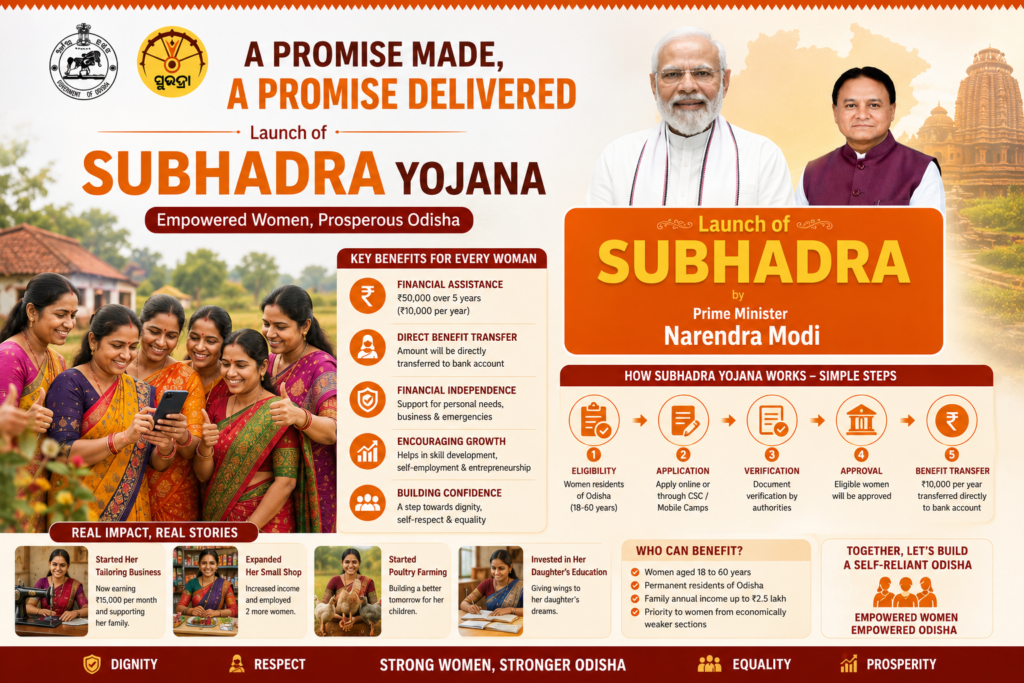
The following table provides a quick overview of the main advantages offered through the scheme.
| Benefit | How It Helps |
| Financial Assistance | Provides monetary support to eligible beneficiaries. |
| Direct Bank Transfer | Payments are sent directly to verified bank accounts. |
| Transparent Process | Digital verification helps improve accountability. |
| Secure Payments | Reduces dependence on intermediaries. |
| Easy Tracking | Applicants can monitor the progress of their application. |
| Better Financial Inclusion | Encourages the use of banking and digital services. |
Why Understanding the Scheme Matters
Many applicants focus only on submitting the application, but understanding the complete process can help avoid unnecessary delays later.
For example, knowing the eligibility conditions before applying can prevent rejected applications. Similarly, preparing the correct documents in advance makes verification much smoother.
After reading this guide, you’ll have a clear understanding of:
- Whether you are likely to qualify.
- Which documents should be kept ready.
- How the application process works.
- How benefits are transferred.
- What to do after submitting your application.
If you’re planning to apply, the next step is to understand the eligibility requirements and prepare the documents needed for the application. These two topics form the foundation of a successful application and can significantly reduce the chances of errors during verification.
Benefits of Subhadra Yojana
For many families, financial support is more than just receiving money—it provides stability and peace of mind. Subhadra Yojana is designed to offer eligible women a helping hand through direct financial assistance while making the entire process more transparent and secure.
One of the biggest advantages of the scheme is that approved benefits are transferred directly to the beneficiary’s registered bank account through the Direct Benefit Transfer (DBT) system. This reduces the need for intermediaries and helps ensure that payments reach the intended recipient safely.
Beyond financial assistance, the scheme also encourages greater participation in formal banking services. By linking benefits to verified bank accounts, beneficiaries become more connected to digital financial services, making future government assistance easier to access.
Key Benefits at a Glance
| Benefit | Why It Matters |
| Direct Financial Assistance | Helps eligible women manage important household expenses. |
| Direct Bank Transfer | Payments are credited directly to the beneficiary’s verified bank account. |
| Transparent Process | Digital verification helps improve accuracy and accountability. |
| Secure Payment System | Reduces delays and minimizes the risk of payment errors. |
| Better Financial Inclusion | Encourages the use of banking and digital financial services. |
How Can the Financial Assistance Be Used?
Every family’s needs are different. While the scheme does not require beneficiaries to spend the assistance in a particular way, many households may choose to use it for everyday priorities such as:
- Household essentials
- Children’s education
- Healthcare expenses
- Emergency family needs
- Savings for future expenses
The flexibility of direct bank transfers allows beneficiaries to decide how the support can best help their families.
More Than Financial Support
Another important aspect of the scheme is convenience. Instead of making repeated visits to different offices, applicants can complete much of the process through the official application system and later monitor the progress of their request.
Before starting the application, it’s a good idea to understand the application process, gather the required documents, and confirm that you meet the eligibility requirements. A little preparation at the beginning can save time and help avoid unnecessary delays later.
Who Is Subhadra Yojana For?
Not every government scheme is designed for everyone. Each programme has a specific purpose and a defined group of beneficiaries. Understanding whether this scheme is intended for you is the first step before spending time on the application process.
Subhadra Yojana is designed to support eligible women in Odisha who meet the conditions set by the Government of Odisha. Its primary goal is to strengthen financial security while making welfare benefits easier to access through a transparent and digital system.
If you’re wondering whether you can apply, don’t worry—many applicants have the same question. The good news is that checking your eligibility is usually much easier than completing the application itself. A few minutes spent reviewing the requirements can save you from delays or rejection later.
Is This Scheme Right for You?
You may find this scheme relevant if you are:
- Looking for government financial assistance available in Odisha.
- Planning to apply for the first time.
- Helping a family member complete the application.
- Trying to understand whether you meet the eligibility conditions.
- Looking for reliable information instead of social media rumours or unofficial sources.
Even if you’re only gathering information today, understanding the process early will make the application journey much smoother if you decide to apply later.
Who Is Eligible to Apply?
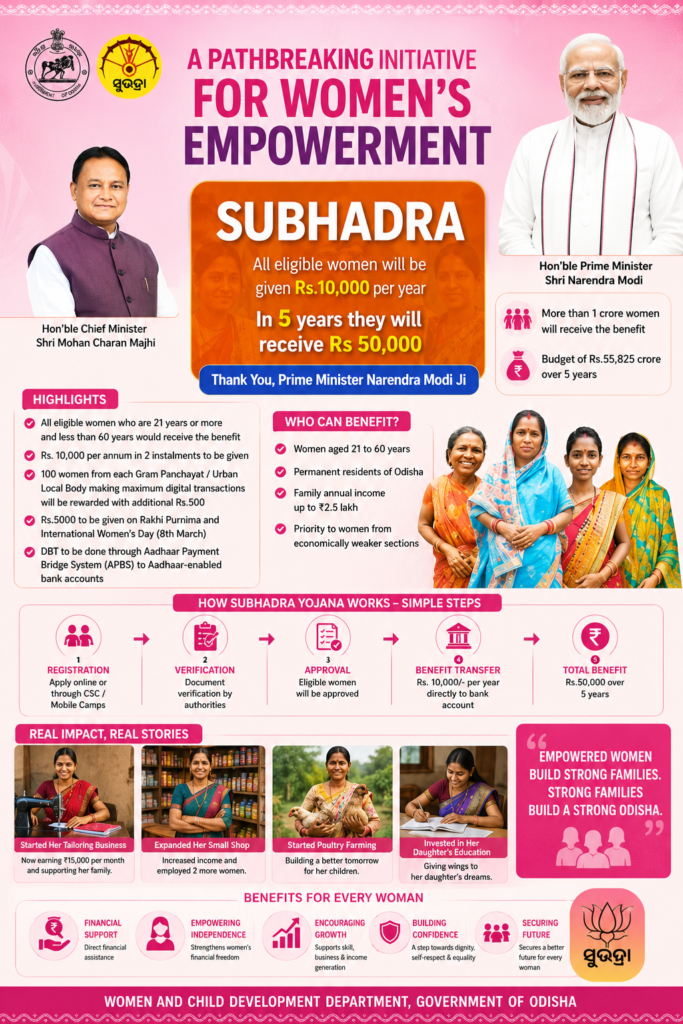
Before filling out the application form, it’s important to check whether you meet the eligibility conditions. Spending a few minutes reviewing the requirements can save you time and help you avoid submitting an application that may not qualify during verification.
Eligibility is determined according to the guidelines issued by the Government of Odisha. While the exact criteria may be updated from time to time, applicants are generally expected to satisfy the prescribed conditions before they can receive benefits under the scheme.
Good to Know: If you’re unsure about any requirement, it’s always better to confirm it before applying rather than correcting mistakes later.
General Eligibility Requirements
Although every application is reviewed individually, eligible applicants are generally expected to:
- Be a woman covered under the scheme’s official guidelines.
- Meet the residency requirements prescribed by the Government of Odisha.
- Provide valid identity and supporting documents during verification.
- Have an active bank account that can receive Direct Benefit Transfer (DBT) payments.
- Complete any verification process required by the authorities.
Meeting these conditions helps ensure that your application can move smoothly through the verification process.
Eligibility Checklist
Before you apply, use this quick checklist.
| Question | Yes / No |
| Do you meet the official eligibility conditions? | ☐ |
| Do you have a valid identity document? | ☐ |
| Is your bank account active? | ☐ |
| Are your personal details accurate and up to date? | ☐ |
| Do you have all the supporting documents ready? | ☐ |
If you answered “Yes” to most of these questions, you’re likely well prepared for the next stage of the application process.
Who May Not Qualify?
Not every applicant will be eligible for the scheme. Applications may not be approved if they do not meet the prescribed conditions or if the verification process identifies missing or incorrect information.
For example, an application could face issues if:
- Required information is incomplete or incorrect.
- Supporting documents cannot be verified.
- Bank account details do not match the applicant’s records.
- The application does not meet the official eligibility guidelines.
Remember, submitting an application does not automatically guarantee approval. Final decisions are made only after the competent authorities complete their verification.
Documents You’ll Need Before Applying
One of the easiest ways to avoid delays is to prepare your documents before you begin the application. Many applications take longer to process simply because some information is missing, unclear, or doesn’t match the official records.
Taking a little time to organise everything in advance can make the application process much smoother and reduce the chances of being asked to submit additional information later.
The exact documents required may vary depending on the latest government guidelines and your individual circumstances. However, most applicants are commonly asked to provide documents that verify their identity, residence, and bank account details.
Commonly Required Documents
The table below gives an overview of the documents that are generally requested during the application process.
| Document | Why It’s Needed |
| Aadhaar Card | To verify the applicant’s identity. |
| Proof of Residence | To confirm eligibility based on place of residence. |
| Bank Passbook or Bank Account Details | To transfer benefits through the Direct Benefit Transfer (DBT) system. |
| Passport-Size Photograph | For applicant identification. |
| Mobile Number | To receive important updates and verification messages. |
| Additional Supporting Documents | If requested during verification by the authorities. |
Important: Document requirements can change over time. Always check the latest official instructions before submitting your application.
Before You Upload or Submit Your Documents
A few simple checks can help prevent unnecessary delays during verification.
Take a moment to make sure that:
- Your name is spelled the same across all documents.
- The photograph or scanned copies are clear and easy to read.
- Your bank account details are correct and active.
- Your registered mobile number is available if OTP verification is required.
- All required documents are complete and valid.
Even a small mismatch in personal details can slow down the verification process.
Keep Digital Copies Ready
If you’re applying online, it’s a good idea to prepare digital copies of your documents in advance. Save them in a commonly accepted file format and make sure they are easy to read.
Having everything ready before you start means you won’t need to stop halfway through the application to search for missing paperwork.
If you’re applying through an authorised service centre, carrying both the original documents and photocopies—where requested—can help the process move more smoothly.
A Simple Tip That Can Save Time
Many applicants focus on filling out the application form but overlook their supporting documents. In reality, your documents play an important role in the verification process.
Before submitting your application, spend a few extra minutes reviewing each document carefully. Confirm that the information is accurate, complete, and consistent. This small step can help prevent avoidable delays and improve the chances of a smooth verification process.
Now that your documents are ready, the next step is to understand how the application process works. In the following section, we’ll walk through each stage—from filling out the form to submitting your application and tracking its progress afterward.
How to Apply for Subhadra Yojana
Once you’ve confirmed that you’re eligible and have your documents ready, you’re ready to begin the application process. While applying may seem complicated at first, it becomes much easier when you complete each step carefully.
Before you start, make sure you have enough time to review the information you enter. Simple mistakes—such as an incorrect bank account number or a spelling error in your name—can delay verification and may require additional corrections later.
The application should always be submitted through the official channels announced by the Government of Odisha. Avoid sharing your personal information on unofficial websites or with individuals claiming they can guarantee approval.
Step-by-Step Application Process
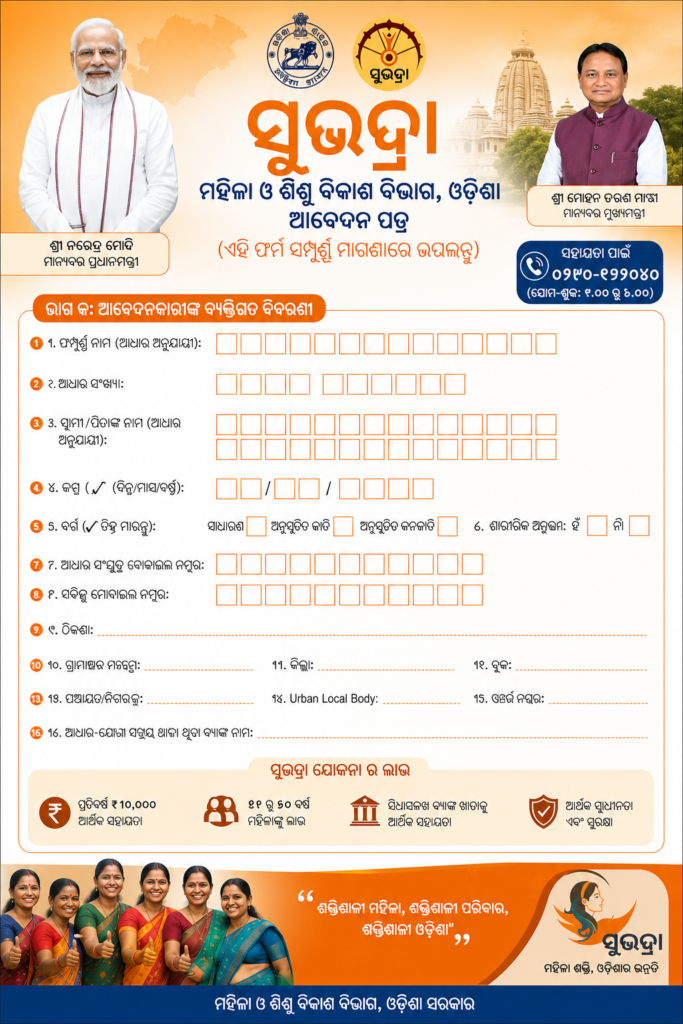
Although the exact process may change if the government updates the scheme, applicants generally follow these steps:
| Step | What You Need to Do |
| 1. Check Eligibility | Confirm that you meet the scheme’s requirements before applying. |
| 2. Gather Documents | Keep all required documents ready for verification. |
| 3. Complete the Application | Enter your personal, address, and bank account details carefully. |
| 4. Verify Your Information | Review every detail before submitting the form. |
| 5. Submit the Application | Complete the submission and keep any acknowledgment or reference number safely. |
| 6. Wait for Verification | The authorities will review the information and supporting documents. |
| 7. Track Progress | Once submitted, you can monitor your application through the application status tracker. |
Tips for a Smooth Application
A little preparation can make the process much easier. Before you submit your application, keep these practical tips in mind:
- Take your time while filling out the form.
- Double-check your name, date of birth, and bank account details.
- Make sure the information matches your official documents.
- Upload clear and readable document copies if you’re applying online.
- Save your application or acknowledgment number after submission.
- Keep your registered mobile number active so you don’t miss important updates.
These simple steps can help reduce the chances of avoidable delays during verification.
What Happens After You Apply?
Submitting the application is only one part of the process. After your form is received, the relevant authorities review the information you’ve provided and verify your supporting documents.
During this stage, your application may move through different verification steps before a final decision is made. The time required can vary depending on the number of applications being processed and the verification procedures in place.
Instead of submitting multiple applications, it’s better to wait for verification and periodically check the application status for updates. If additional information or documents are required, following the official instructions promptly can help prevent unnecessary delays.
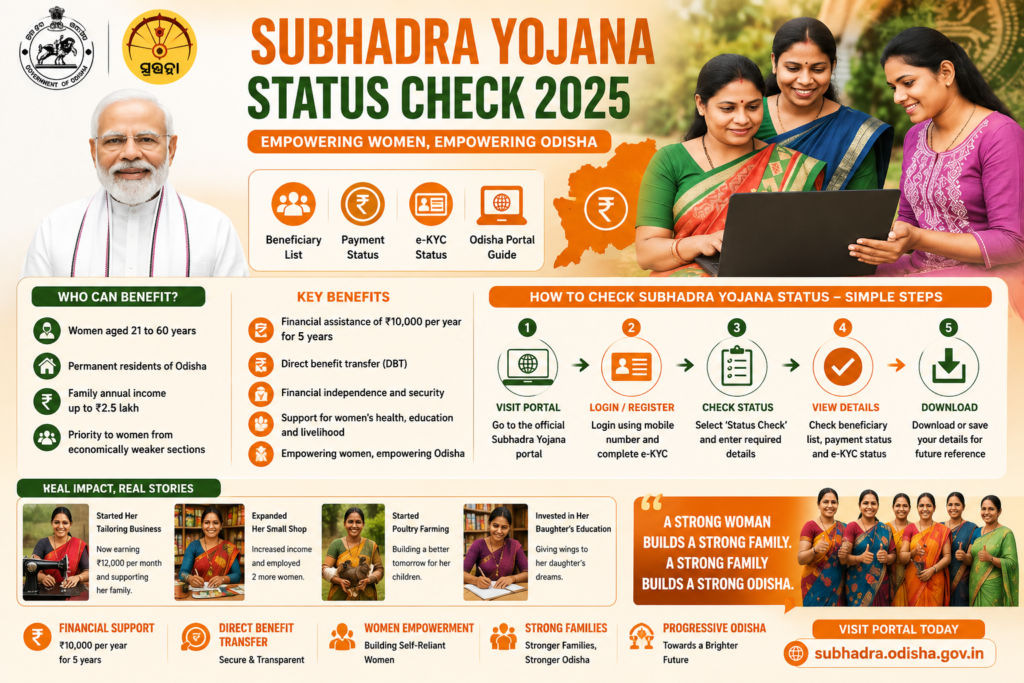
How to Check Your Application Status
After submitting your application, it’s natural to wonder what happens next. The verification process takes time, and many applicants become concerned if they don’t receive an immediate update. In most cases, there’s no need to worry. Your application must first go through the required verification before a final decision is made.
Instead of submitting another application or relying on unofficial information, it’s better to check your status through the official platform whenever updates become available. This helps you understand where your application stands and whether any further action is required.
Why Checking Your Status Is Important
Tracking your application helps you stay informed throughout the process. It can also alert you if additional verification or supporting documents are needed.
Checking your status can help you:
- Confirm that your application has been received.
- See whether it is under verification.
- Find out if any additional information is required.
- Know when your application has been approved.
- Stay updated before the payment process begins.
Keeping track of these updates can save time and prevent unnecessary confusion.
What Different Status Messages May Mean
During the review process, you may come across different status messages. While the wording can vary, they generally indicate the current stage of your application.
| Status | What It Usually Means |
| Submitted | Your application has been received and is awaiting review. |
| Under Verification | The submitted information and documents are being checked. |
| Approved | Your application has successfully completed verification. |
| Pending | The review is still in progress or additional checks are being carried out. |
| Rejected | The application could not be approved based on the verification results or scheme guidelines. |
Note: The exact status names and their meanings may change if the official system is updated.
If Your Application Is Still Pending
A pending status doesn’t always indicate a problem. Verification can take time, especially when a large number of applications are being processed.
While waiting, it’s a good idea to:
- Check your status from time to time using the official platform.
- Keep your registered mobile number active for important notifications.
- Make sure your submitted information remains accurate.
- Follow any instructions issued by the authorities if additional verification is requested.
Avoid submitting a second application unless the official guidelines specifically advise you to do so, as duplicate submissions may create unnecessary delays.
What Happens After Approval?
Once your application is approved, your name may appear in the beneficiary list according to the official process. After that, the approved financial assistance is scheduled for transfer to your registered bank account through the Direct Benefit Transfer (DBT) system.
If your application has already been approved, the next step is understanding how the beneficiary list works, how to confirm your name has been included, and what to expect before the payment is released. We’ll cover that in the next section.
Understanding the Beneficiary List
Once your application has been reviewed and approved, the next thing you’ll likely want to know is whether your name has been included in the beneficiary list. This list contains the names of applicants who have successfully completed the verification process and are eligible to receive benefits under the scheme.
For many applicants, appearing on the beneficiary list is an important milestone. It confirms that the application has moved beyond the verification stage and is progressing through the official process. However, it’s worth remembering that publication of the list and the release of payments do not always happen on the same day.
If you have recently received an approval update, don’t be concerned if your name doesn’t appear immediately. Lists may be updated periodically as new applications are processed.
Why the Beneficiary List Matters
Checking the beneficiary list can help you understand whether your application has reached the next stage. It also provides reassurance that your details have been accepted through the official verification process.
Here are a few reasons why applicants check the list:
- To confirm that their application has been approved.
- To verify that their name has been included in the latest published list.
- To stay informed about the progress of the scheme.
- To know when to expect the next stage of the benefit process.
If your application is still under review, your name may appear in a future update once verification is complete.
What Should You Do If Your Name Isn’t on the List?
Not finding your name straight away doesn’t always mean your application has been rejected. There can be several reasons why it isn’t visible yet.
For example:
| Possible Reason | What You Can Do |
| Verification is still in progress | Wait for the next official update and check again. |
| The latest list hasn’t been published yet | Monitor announcements from the official authorities. |
| Additional verification is required | Follow any instructions you receive and provide the requested information. |
| Application wasn’t approved | Review the reason, if available, and check whether you’re eligible to apply again under future guidelines. |
The most important thing is to avoid relying on unofficial lists or information shared on social media. Always verify updates through official government sources.
What Comes After the Beneficiary List?
Once your name appears in the beneficiary list, the next stage is the release of financial assistance. Payments are generally processed through the Direct Benefit Transfer (DBT) system and credited directly to the beneficiary’s registered bank account.
Although many applicants expect payment immediately after approval, the transfer depends on the official payment schedule and successful completion of all required verification checks.
How the Payment Process Works
Receiving approval is an important milestone, but it’s not the final step. After your application has been verified and your name is included in the beneficiary list, the next stage is the release of financial assistance.
To make the process secure and transparent, payments are generally made through the Direct Benefit Transfer (DBT) system. Instead of issuing cash or paper cheques, the approved amount is transferred directly to the beneficiary’s registered bank account. This approach helps reduce delays, minimizes errors, and ensures that the financial assistance reaches the intended recipient.
Keep in mind that payment is processed only after all required verification has been completed successfully.
How Are Payments Made?
Once the authorities approve an application, the payment process follows a structured workflow.
| Stage | What Happens |
| Application Approved | The verification process is successfully completed. |
| Beneficiary Confirmed | The applicant becomes eligible for payment. |
| Payment Processed | The approved amount is prepared for transfer. |
| DBT Transfer | Funds are sent to the registered bank account. |
| Payment Completed | The amount is credited after successful processing. |
The exact processing time may vary depending on administrative procedures and the official payment schedule.
Before You Expect the Payment
Before waiting for the amount to be credited, it’s worth checking a few important details. Many payment delays happen because of small issues that can easily be avoided.
Make sure that:
- Your bank account is active.
- The account details provided in your application are correct.
- The account is able to receive DBT payments.
- Your identity verification has been completed successfully.
- Any additional verification requested by the authorities has been completed.
Spending a few minutes reviewing these details can help prevent unnecessary delays later.
What If You Don’t Receive the Payment?
If your application has been approved but the payment hasn’t reached your bank account, don’t panic. In many cases, the issue is temporary and can be resolved after verification or the next payment cycle.
Before assuming there’s a problem, check the following:
- Has your application already been approved?
- Is your name included in the latest beneficiary list?
- Are your bank account details correct?
- Has the payment cycle for your application been completed?
- Have you received any official notification requesting additional verification?
If everything appears to be correct but the payment is still pending, follow the instructions provided through the official channels rather than relying on unofficial advice or social media posts.
Stay Informed Through Official Updates
Government schemes are reviewed and updated from time to time. Payment schedules, verification procedures, and administrative processes may change based on new notifications issued by the Government of Odisha.
For that reason, it’s always a good idea to check official announcements periodically instead of depending on rumours or unverified information shared online.
Common Problems and How to Resolve Them
Even if you’ve completed the application carefully, you may still face delays or unexpected issues during verification or payment. In most cases, these problems can be resolved without submitting a new application.
Understanding the possible reasons behind a delay can help you take the right action instead of making unnecessary changes or relying on unofficial advice.
The table below highlights some common situations that applicants may encounter and the appropriate response.
| Issue | Possible Reason | What You Can Do |
| Application is still pending | Verification is in progress | Wait for the next official update and check your status again. |
| Application was rejected | Eligibility or document verification was not successful | Review the official reason, if available, and correct the issue before taking further action. |
| Payment not received | Verification or payment processing is still ongoing | Confirm your application has been approved and verify your bank account details. |
| Name not found in the beneficiary list | The latest list may not have been updated yet | Check future list updates through official sources. |
| Incorrect personal details | Information does not match official records | Contact the appropriate authority if corrections are permitted. |
Mistakes You Should Avoid
Many applicants unintentionally create additional delays by making quick decisions before understanding the actual issue.
To help your application move smoothly, avoid these common mistakes:
- Submitting the same application more than once.
- Entering different personal details in different documents.
- Ignoring official notifications or verification requests.
- Sharing personal information with unofficial websites or unknown individuals.
- Trusting social media posts without confirming the information through official government channels.
A little patience and careful attention to official updates can often prevent unnecessary complications.
Where to Get Reliable Information
When a government scheme becomes popular, it’s common for incorrect information to spread online. Payment dates, eligibility rules, and application procedures are sometimes shared without verification, leading to confusion among applicants.
Whenever you need information about the scheme, rely on official government announcements and authorised communication channels. If you’re unsure about a particular update, it’s always better to verify it before taking any action.
Using trusted sources helps protect your personal information and ensures you’re following the most recent guidelines.
A Quick Checklist Before You Seek Help
Before contacting the relevant authorities or visiting a service centre, take a few minutes to review the basics.
✔ Have you checked your application status?
✔ Has your application already been approved?
✔ Is your bank account active and correctly linked?
✔ Have you reviewed the latest beneficiary list?
✔ Did you receive any message requesting additional verification?
In many cases, reviewing these points answers the question without needing further assistance.
Frequently Asked Questions (FAQs)
Below are answers to some of the questions people ask most often before and after applying. These quick explanations can help clear up common doubts without having to search through multiple sources.
Can I apply if I’m not sure whether I’m eligible?
It’s always a good idea to check the official eligibility conditions before submitting an application. Applying without meeting the required criteria may result in delays or rejection during the verification process.
Is there any application fee?
Applicants should only use the official application channels and follow the instructions issued by the Government of Odisha. Be cautious of anyone asking for money or promising guaranteed approval, as official government schemes follow a defined process and approvals are based on eligibility and verification.
How long does the verification process take?
The time required can vary depending on the number of applications being processed and the verification procedures in place. Some applications may be completed sooner than others, so it’s best to check your application status periodically instead of assuming there is a problem.
Can I edit my application after submission?
This depends on the options provided through the official application system. If corrections are allowed, follow the official instructions carefully. If no correction option is available, avoid submitting a duplicate application unless specifically advised by the authorities.
What should I do if my payment is delayed?
Start by confirming that your application has been approved and that your bank account details are correct. Also check whether the latest payment cycle has been completed. If everything appears correct but the payment is still pending, follow the guidance provided through official government channels.
Will I receive updates on my application?
If you’ve provided a valid mobile number and completed the required verification, you may receive updates through the communication methods used by the authorities. However, it’s also a good practice to check your application status from time to time rather than waiting only for notifications.
Conclusion
Subhadra Yojana is an important initiative aimed at supporting eligible women in Odisha through direct financial assistance. By using a transparent application process and the Direct Benefit Transfer (DBT) system, the scheme helps deliver benefits securely while encouraging greater financial inclusion.
If you’re planning to apply, don’t rush through the process. Take the time to understand the eligibility requirements, prepare your documents, and submit accurate information. Once your application has been submitted, keep track of its progress through the official channels and stay informed about any updates issued by the Government of Odisha.
Whether you’re applying for yourself or helping a family member, being well informed is the best way to avoid unnecessary confusion and complete the process with confidence.